Anne Lespine decided to major in biology because of her interest in the life sciences. After getting her PhD and several stays abroad, she became involved in research in hospital nutrition before coming to INRA. After humans, she focused on animals, with the ongoing aim of addressing society's major demands through research, independently of the pharmaceutical industry: "even if we have to take the applications of our research into account, we can develop our scientific line of thought without being tied to an immediate economic issue, allowing us to take on new research priorities", says Anne Lespine with her lovely southern French accent.
Improving animal health, farm productivity and the quality of consumer products
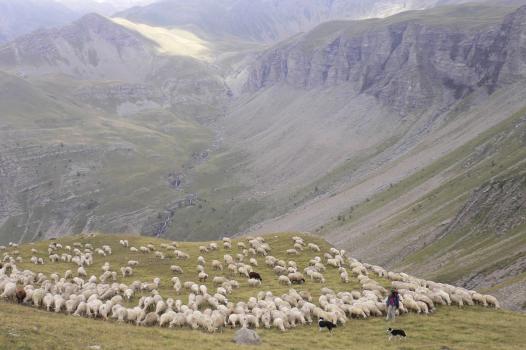
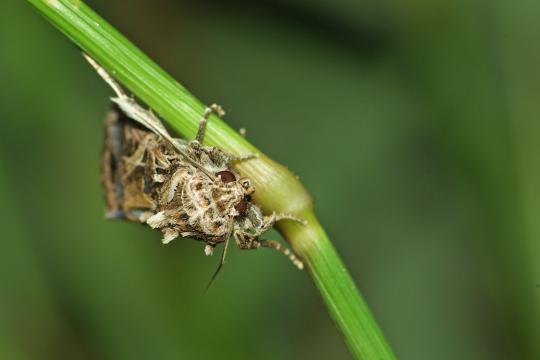
Anne Lespine, recruited at INRA in 2001 on the basis of her earlier experience, is in charge of the Pharmacokinetics team. She enjoys working in a collective scientific environment because, according to Anne Lespine, "research is, above all, the work of a team". The animals that interest Anne Lespine are farm animals such as cattle, sheep and goats. They are the target of parasites that not only compromise their comfort but that stand in the way of their growth and lead to productivity problems. These parasites include gastrointestinal worms as well as parasitic mites such as those that cause scabies, or warble, the maggot of the warble fly that thrives on cattle. "Warble is a typical example of this problem: not only does it harm the animal's health but its skin is no longer of value to the leather industry", explains Anne Lespine.
Parasites develop resistance
Anne's team works on the family of antiparasitic molecules known as macrocyclic lactones that appeared in the 1980's, after some parasites developed a resistance to drugs commonly used at that time. They present considerable advantages: "They have a broad spectrum and are effective in very small doses. This has made it possible for us to create a warble monitoring plan in France, Europe and even in China where we are involved in a programme to protect yaks". For the time being, they are the only alternative that we have to traditional drugs: "To put a drug on the market, extensive and costly studies must be undertaken beforehand, both in relation to the impact of the drug on the animal as well as the effect of its possible residues on humans and on the environment. Research and development is therefore not always possible in the area of veterinary medicine. We must sustain the use of these molecules by putting them to the best possible use".
Research and pharmacokinetics at the service of orphan species
Anne Lespine's basic tool is pharmacokinetics that allows her to observe the behaviour of a specific drug on different animals: "By taking blood samples and establishing exposure curves, we can observe that, given the same dose, the cow is more exposed to the drug than the goat". The unit is particularly interested in goats since they are considered to be an "orphan" species in veterinary pharmacopoeia. "Generally speaking, veterinarians prescribe the same doses for goats as for cattle. Since the goat eliminates more effectively than the cow, this results in underdosage and an increased risk of resistance. We have recommended that they double the doses and it has worked". The INRA team encourages those involved in veterinary therapeutics to take their research into account, but even more: "We try to make manufacturers understand that the need for specific doses exists and to impress upon health authorities the necessity of making it easier to market a drug when it is a question of extrapolating from one species to another".
A better understanding of drugs for more effective use
In order to better understand macrocyclic lactones, Anne works on 'efflux proteins'. These 'P-glycoproteins', located on the membranes, extrude drugs from cells. "When these 'PGP' extrude macrocyclic lactones, they then change their behaviour in the organism and control their toxicity". The team that Anne Lespine works with discovered the reasons why some animals are genetically sensitive to macrocyclic lactones: these molecules cause serious neurotoxic signs in these animals. "Collies, in particular, have a deletion at the level of a gene that codes for PGP. The protein produced is truncated and non-functional", explains Anne, with scientific precision. Macrocyclic lactones can obviously not be used in certain animals with a specific genetic profile. For the others, Anne is pursuing her in vitro and in vivo research in order to find a way to increase their efficacy, particularly by trying to combine them with molecules capable of reducing PGP activity: "What I like is that this mechanistic research has real applications in the field", concludes Anne.
|