|
|
|
INRA at the heart of several projects supported by the French Stimulus Initiative
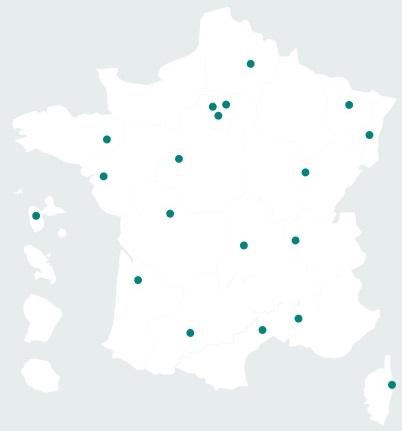
In the coming decade, the French Stimulus Initiative ("Investissements d'Avenir") will shape research in France. INRA will participate in this national research and innovation strategy initiative, whose cross-cutting and internationally minded objectives are in line with INRA’s research priorities for the decade 2010-2020. INRA will concentrate on a few strategic axes when answering calls for proposal, namely white biotechnology, green biotechnology and the environment. A large number of INRA-supported projects were selected in the results of these first calls for proposal. They highlight partnerships with higher education as well as identify research clusters.
|
| |
| |
|
Green and white biotechnologies
There are major, global challenges to meeting humankind’s needs, owing to increasing food and non-food demand, calls for reducing our environmental footprint and growing uncertainties due to climate change. The sustainable intensification of agriculture and the development of a renewable carbon-based economy will thus be major issues contributing to the emergence of a 21st century bioeconomy. To meet these challenges, INRA is developing integrated research that ranges from the study of genomes to the study of food, energy and chemical systems and ecosystem services, uniting numerous fields of study including social and human sciences. Food system sustainability has again come to the fore. Progress in white biotechnology – which uses microorganisms and their enzymes to yield biofuels, biolipids, bioplastics and other chemical molecules from biomass – has fostered new advances in the development of sustainable chemistry. These global issues have lead INRA to align its research with international projects and to reinforce its socioeconomic partnerships.
The French Stimulus Initiative will support SPS and AGRO, two green biotechnology laboratories of excellence (Labex) in which INRA is heavily involved, as well as two INRA-coordinated research projects on key grain crops – Breedwheat for wheat and Amaizing for maize. In the field of white biotechnology, a pre-industrial demonstrator project to develop renewable carbon applications, Toulouse White Biotechnology (TWB) has been selected as well as three research projects, Synthacs, Biorare and Idealg, in the calls for proposal for biotechnology and bioresources projects.
Saclay Plant Sciences (SPS), a Labex in the Île-de-France region, aims to create France’s largest research, teaching and training consortium on plant biology, making it possibly one of the world’s largest. SPS will investigate three interrelated issues, namely predictive biology, plant development and plant biotechnology innovations, in order to adapt crop systems to changing environments and to elaborate uses for plant biomass. Bringing together five partners and supported by the Saclay scientific cooperation foundation, this Labex is coordinated by Loïc Lepiniec, INRA at the Jean-Pierre Bourgin Institute.
Further information on the Jean-Pierre Bourgin Institute website:
http://www-ijpb.versailles.inra.fr/en/institut/actualite.htm
In Montpellier, one of the Consultative Group on International Agricultural Research’s (CGIAR) bases, the agronomy and sustainable development Labex, AGRO, is pursuing the establishment of the world’s most important research centre for agronomically important plants. It intends to build an integrated approach to tropical, Mediterranean and temperate plants, encompassing everything from plant genetics to final uses. Supported by the Agropolis Foundation, this project brings together six partners. INRA is a founding member of the Agropolis Foundation, whose director, Anne-Lucie Wack, coordinates this project.
http://www.agropolis-fondation.fr/news/93/68/Agropolis-Fondation-laureate-of-French-National-Labex-programme.html
Breedwheat and Amaizing aim at improving the competitiveness of French agriculture by creating new bread wheat and maize varieties for sustainable production, using advanced knowledge and technology in plant genomics, physiology, genetics and biotechnology.
Headed by Catherine Feuillet (INRA Clermont-Ferrand), Breedwheat involves 26 partners, including 11 private companies, in France and in Europe. The total budget of Breedwheat is €39 million for 9 years, with €9 million granted by the French National Research Agency.
Headed by Alain Charcosset (INRA Versailles-Grignon), Amaizing involves 24 partners, including 7 breeding companies and 2 biotech companies. The total budget of Amaizing is €30 million for 8 years, with €9 million granted by the French National Research Agency.
http://www.international.inra.fr/press/2_long_term_programmes_on_wheat_and_maize
Toulouse White Biotechnology (TWB), coordinated by Pierre Monsan (INSA Toulouse), aims at becoming a centre of excellence for white biotechnology, contributing to the economic competitiveness of France by focusing on biotechnology and the life sciences. It is an infrastructure project for demonstrating the technical maturity and socio-economic feasibility of industrial (or “white”) biotechnology products and processes. It will cover from lab to preindustrial pilot scale, to accelerate the transfer of innovation to industry. The project will receive a grant of €20 million from the French National Research Agency.
http://www.international.inra.fr/press/launch_of_toulouse_white_biotechnology
Synthacs is looking to develop chemical molecules from biomass as an alternative to petrochemical products. It will make use of the new Toulouse White Biotechnology (TWB) centre of excellence’s services. It is supported by INSA in association with CNRS and INRA, among others. The project will receive a €3.5 million grant from the French National Research Agency.
Biorare is developing innovative solutions to actively promote the role of organic waste in renewable energy. It is supported by CEMAGREF and brings together five partners including the INRA Laboratory for Environmental Biotechnology in Narbonne. The project will receive a €2.2 million grant from the French National Research Agency.
Idealg aims to promote the sustainable use of marine biomass and marine biomass diversity, notably by investigating the biology and genomics of macroalgae. This project is supported by the European University of Brittany (UEB) and brings together 18 partners, including INRA. The project will receive a €10 million grant from the French National Research Agency.
Environment – Forests
Climate change over the course of this century (between +2°C and +5°C, according to IPCC projections) will affect agriculture and forestry first and foremost with, notably, disruptions in water availability, the arrival of new plant and animal pests and changes to soil makeup. Research carried out by INRA will have to suggest possible changes to agriculture and forestry in order to limit the impact of these effects, and also to explore the potential for forests, crops and livestock to mitigate climate change.
To that end, the French Stimulus Initiative will support four Labex projects, where INRA is highly active, in favour of continental coastal ecosystems (COTE), plant, animal and pest interaction (TULIP), Amazonian biodiversity (CEBA), and biodiversity (CEMEB). The COTE project will avail itself of the XYLOFOREST equipment of excellence (Equipex) to carry out its research.
The COTE Labex, studying evolution, adaptation and governance of continental coastal ecosystems, is supported by the University of Bordeaux research and training centre and is coordinated by Antoine Kremer (INRA-Bordeaux) and Hélène Budzinski (CNRS, Bordeaux). Ten partners are brought together under COTE. The project links physics, chemistry and biology with social science in order to put forward a new modelling approach designed to improve capacities in change prediction for ecosystems responding to environmental change (extinction, adaptation or transformation) and human pressure.
The TULIP Labex project, Towards a unified theory of biotic interaction: the role of environmental disturbances, is supported by the University of Toulouse research and training centre and brings together four partners. TULIP is coordinated by Dominique Roby, director of the CNRS-INRA Plant-Microorganism Interaction Laboratory in Toulouse. This project favours an interdisciplinary approach, combining biology and ecology, to focus on the interaction between organisms or communities, both in natural and human-altered conditions.
The Study Centre for Amazonian Biodiversity (CEBA Labex) is supported by the Antilles-Guiana University with close relationships with research teams of Metropolitan France. CEBA is coordinated by Jérôme Chave from CNRS. It brings together the research organisations present in Amazonia, namely CNRS, CIRAD, IRD and INRA. The project will aid in identifying methods to preserve tropical forests while meeting the needs of those who inhabit them.
The CEMEB Labex, Mediterranean Centre for the Environment and Biodiversity, is supported by the University of Montpellier II, coordinated by Jean-Dominique Lebreton from CNRS, and brings together four partners. This Labex plans to establish a Knowledge and Expertise Centre on Biodiversity Issues using a highly integrative approach to research in order to suggest concrete action on the problems affecting biodiversity. This project will also endeavour to improve expertise and support capabilities for government and civil society decision-makers and to disseminate information to schools and the public.
XYLOFOREST is an Equipex in the field of forestry and timber. In order to optimise the use of French forests, Xyloforest will furnish research laboratories with high-level biotechnology and equipment for work with cultivated forests and timber. This project is coordinated by Jean-Michel Carnus from the Forest-Timber Unit of the INRA Bordeaux Research Centre. The project will receive a €10.2 million grant from the French National Research Agency.
INRA is partner with two biology and health infrastructures recognised by the French Stimulus Initiative: Biobanques and France Génomique. They will play a vital part in advancing research on green and white biotechnologies.
The infrastructure project granted to Biobanques brings together stakeholders from the French Biobank Network, tumour libraries, and microbiology and microorganism resource centres (mBRCs). Teams from INRA’s International Centre for Microbial Resources (yeasts, food bacteria, animal and human pathogenic bacteria, phytopathogenic bacteria and filamentous fungi) will work together on this project.
France Génomique is a shared infrastructure, supported by CEA, bringing together INSERM, CNRS and INRA. It gathers the scientific community together to carry out work on sequencing, genotyping and associated bioinformatics and aims to increase French capacities in genome and bioinformatics data analysis.
In the environmental field, INRA is also a partner of the Aster-Cerege Equipex, which is studying natural and anthropic CO2 exchanges in the atmosphere, oceans, vegetation and soil to better understand the factors determining the current climate.
In the Human and Social Sciences
The SITES Labex, Science, Innovation and Technology in Society, in the Île-de-France region, is supported by the Université Paris Est and brings together six partners. Pierre-Benoît Joly, from the INRA Science and Society Research Unit, runs this project that looks at knowledge production and governance methods at various levels of administration in a wide range of fields and issues, namely agriculture and biotechnology, information and communication technologies, nanotechnologies, and health and environmental risks.
Financed by the French National Research Agency, funding levels for the Labex have not yet been announced. INRA is partnered with twelve further projects, namely:
- Five biology-health projects: BRAIN (Bordeaux Region Aquitaine: Initiative for Neuroscience), REVIVE (stem cells and regenerative medicine), GRAL (Grenoble Alliance for integrated structural and cellular biology), IBEID (Integrative Biology for Emerging Tropical Infections), and MAbImprove (developing therapeutic monoclonal antibodies);
- Three environmental projects: RESSOURCES 21 (Strategic metal resources for the 21st century), VOLTAIRE (Study of geofluids and volatiles – Earth, Atmosphere and Interfaces: Resources and the Environment), and NUMEV (digital solutions, materials and models for the environment and living organisms);
- Three projects in the human and social sciences: OSE (Pioneering Economic Science), Entreprendre and IAST (Toulouse Institute for Advanced Studies);
- One material science project: AMADEus (custom advanced materials).
Lastly, INRA is involved in ICAN, the Institute for Cardiometabolism and Nutrition, one of the six university hospital centres selected by the French Stimulus Initiative. It brings together the Université Pierre et Marie Curie, Assistance Publique-Hôpitaux de Paris, Centre de Recherches en Nutrition Humaine, CIC and the INSEAD business school and research institution.
|
|
Written by :
Communications Department
Label for the news :
Research strategy
Date for the news :
2011.05.20
Date of creation : 20/05/2011
Date of last update : 02/09/2011
|
|
|
|