Quick access :    Quick search :   OK
The institute partnerships Research join us
All about INRA research  | Metaprogrammes  | Some examples  | Directories  | Scientific resources  | Science in motion


Print

Tip a friend

 
Home > Research > Scientific resources > Platforms and facilities > Proteomics Network

Proteomics Network

Massprot’Inra is a network of mass spectrometry platforms.


© INRA, François Chevalier
Proteomics is the study of proteins at the cellular level to obtain “snapshots” of the state and operation of cells. It allows for better characterisation of the variability of individual organisms in a species, whether animal, plant or microbial. INRA has pooled its resources in order to implement this technology which requires costly equipment, namely mass spectrometers. Platforms have been established to provide resources to the entire scientific community.


Above: Two-dimensional electrophoresis gel of proteins from an Arabidopsis thaliana cell culture, stained with Deep PurpleTM


Gaining insight into proteins and the state and operation of cells in different situations

Proteomics is a recently-developed science that studies all the proteins synthesized in a cell, as well as their roles, structures, localisations and how they interact.

Proteomic analysis enables researchers to do an inventory of all the proteins present in a particular cell or cell compartment under defined conditions. While the genome (all the genes of an organism) of a cell is static, the proteome is variable and reflects the cell’s state and how it functions.
The proteome of a cell is like a snapshot of the cell at a given time. It is distinguishable from other proteomes by the difference in quantity of a given protein and also by the presence or absence of certain proteins.
proteome_emmentali.jpg

© Valérie Gagnaire
Two-dimensional electrophoresis gel of proteins extracted from Emmenthal cheese at the end of the aging process, stained with CoomassieTM blue


Proteomic analysis enables researchers to do an inventory of all the proteins present in a particular cell or cell compartment under defined conditions. While the genome (all the genes of an organism) of a cell is static, the proteome is variable and reflects the cell’s state and how it functions.
The proteome of a cell is like a snapshot of the cell at a given time. It is distinguishable from other proteomes by the difference in quantity of a given protein and also by the presence or absence of certain proteins.


Proteomics has significantly developed as a science in recent years due to 1) advances made in mass spectrometry; and 2) the exponential increase in available genome sequences. The standard technique used in proteomics consists in first separating the proteins expressed in a cell or a cell compartment. Each protein of interest is then hydrolysed into fragments (peptides) using a protease with a known cleavage site. Mass spectroscopy then serves to precisely measure the different peptides, which together make up the protein signature (this process is called "peptide mass fingerprinting"). The protein is identified by comparing the mass with the theoretical mass, which is calculated according to the genome sequences.

Proteomic analysis as described above is clearly in its simplest form. While it performs optimally in the majority of cases, it must be adjusted when studying proteins from organisms whose genome is unknown or little known. Modifications are also necessary if the proteins have undergone changes following synthesis (post-translational modifications) or if they are minor proteins or part of a particularly complex mix of proteins.

Tools used for many types of research at INRA

When first developed at INRA, proteomics centred on plant research; however, since then, its use has spread to nearly all the Institute’s areas of research. For instance, it enables researchers to identify variability in a given plant species in order to select varieties with the most interesting properties, or to understand how a bacterium adapts to a technological stress, in order to improve the selection of strains. It also allows for the comparison of proteomes in a cell under different conditions in order to identify proteins, the markers of a given state of the cell.

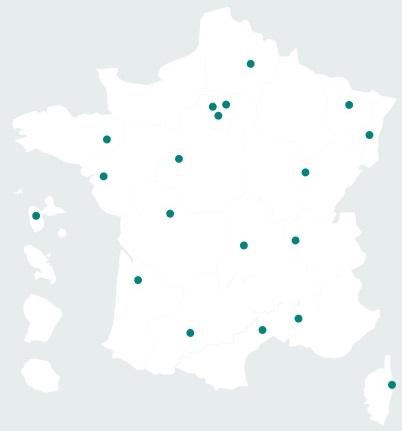
In response to the development of proteomics, a vast number of INRA research units ordered high-performance chromatography and electrophoresis equipment for separating proteins. Mass spectrometers are considered heavy-duty equipment with high purchasing and maintenance costs that must be shared amongst several research units or borne by a regional centre; they are in fact often acquired with funding from the regions themselves. Eight mass spectrometry platforms for proteomics have emerged over the last five years at INRA. They vary in size, can either be independent or attached to research units, and are sometimes part of a Genopole® or jointly run by the French National Centre for Scientific Research (CNRS). These platforms have the mass spectrometry equipment and know-how to meet the needs of the scientific community in proteomics and priority for their use is given to INRA teams. The engineers and heads of platforms often act as partners with the research teams for projects that include proteomic technology. The quality of proteomic analysis and thus of research projects depends on sample preparation, a key step which must be carried out by the research team in close collaboration with platform staff, who are responsible for the identification of proteins.

Aims of the Massprot’Inra network

The heads and engineers of the platforms recently joined forces to create the Massprot’Inra network, which highlights INRA’s authority in the field of mass spectrometry as applied to proteomics. The network will allow for optimum sharing of equipment and expertise. The heads of the platforms and engineers will also be able to discuss their experiences, find solutions to technical, organisational and financial difficulties, improve data management and quality assurance, provide information at INRA and offer training. A training session for researchers in mass spectrometry and proteomics has been organised by the network from 21 to 25 November 2005 in La Rochelle, on the West coast of France.


Proteomics Platforms

INRA has eight mass spectrometry proteomics platforms, several of which are jointly run with the French National Centre for Scientific Research, or CNRS. They have the mass spectrometry equipment and Lire la suite


Written by :  Véronique Monnet
Label for the news :  Topic
Date for the news :  2011.03.08
Date of creation : 19/10/2005
Date of last update : 24/10/2005


All about INRA research

Metaprogrammes

Some examples

Directories

Scientific resources


Science in motion

Head office: 147 rue de l'Université 75338 Paris Cedex 07 FRANCE - tel: +33(0)1 42 75 90 00 | copyright © INRA 2005 | Credits | Legal notice